
Unique Tea Ware
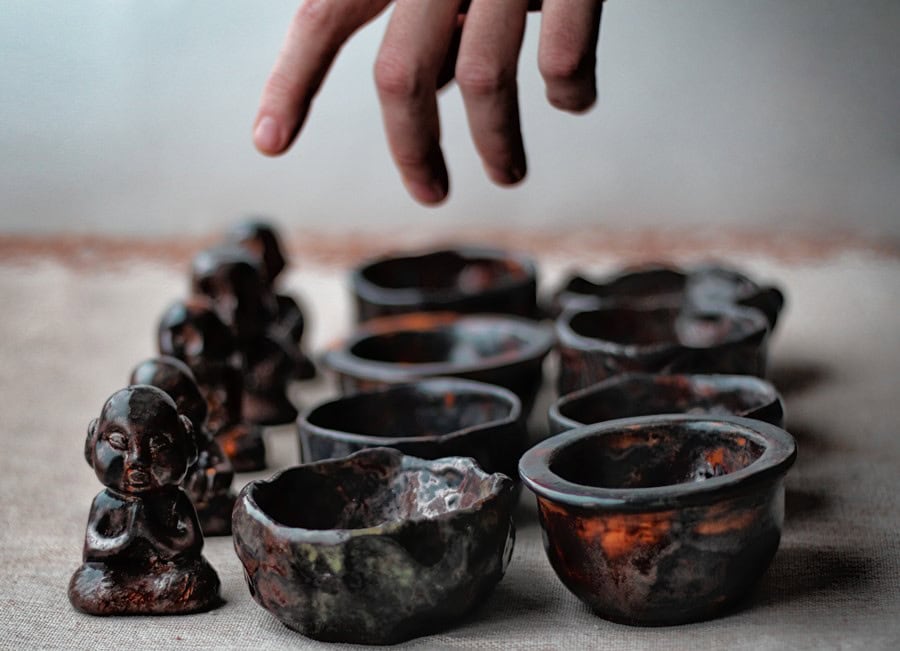
Any verse begins with a syllable. Any tea-time begins with the form, a vessel from which one can enjoy tea. It’s hard to overestimate the importance, whether it’s handmade tea ware or affordable factory-made teacups, in the process of tea-drinking. Teacups, gaiwans, teapots, chahais, chahes – all tea paraphernalia has a rich and long history, converging to the present, where the form has attained ultimate simplicity and found richness in execution.
The mundane purpose of tea utensils is to make the consumption of tea possible, while the poetry lies in enriching the tea-drinking process and creating the necessary atmosphere. It’s not just about what we think but also about how we think about it. The tea vessel’s shape is responsible for the proper perception of the drink itself, so selecting the right utensils for a Chinese tea ceremony is the key to proper tea-drinking both in a spiritual and practical sense.
As of today, finding utensils for a Chinese tea ceremony isn’t difficult. The question remains about the quality of the offered products. The modern market is filled with various offerings: porcelain, semi-porcelain, Yixing clay, common clay, common clay disguised as Yixing, various types of ceramics, glass – in our time, you can find anything. And all of these can be found at very different prices, which often do not correspond to the quality of the product itself. The question of quality becomes crucial when it comes to practical use and the attitude towards tea in general. After all, drinking good tea with good people from low-quality utensils is not only untidy but also inconvenient.
What makes handmade pottery so appealing?
In our opinion, the main issue with the modern tea ware market is that the majority of products lack uniqueness. We won’t even mention those teacups, gaiwans, and teapots that are impractical and, unfortunately, enjoy stable demand. Rare offerings of unique ware do exist. Sometimes, you might come across handmade Yixing teapots at exorbitant prices. There are even fewer chances of finding affordable handmade gaiwans or teacups in the market.
Every tea ceremony is unique because it is the embodiment of the perception of the person who performs the tea ceremony. Each tea is unique, having been harvested and processed under specific conditions by specific people. In most cases, the only thing lacking authenticity is the tea ware. And this circumstance can be rectified.
Tea is a beverage that is rich in symbolism, and a tea ceremony fully embodies ritual symbolism. Through this symbolism, one can express the respect that the ancient beverage deserves. Tea, when consumed with attentiveness and reverence, always exerts that magical influence on the body and spirit of the tea lover.
Clay used in making tea ware is particularly receptive to the touch of human hands. The clay appreciates the time devoted to it by these hands. (It also values the time invested by these hands) Clay items, filled with the efforts and thoughts of the master, acquire a certain authenticity, they become real. Drinking from handmade tea ware is like holding onto a red thread extended from ancient times. It’s a thread of authenticity and the essence of simple things.
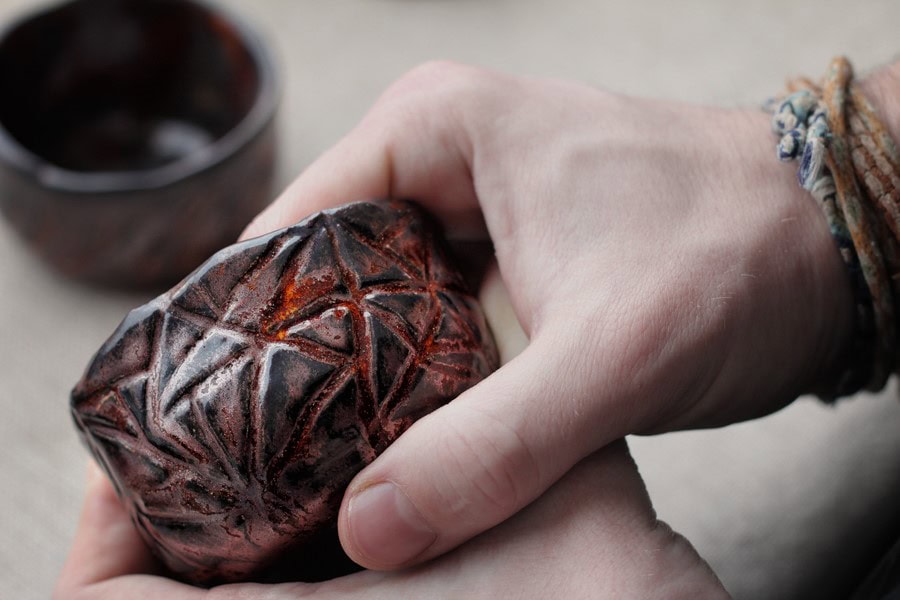
Hence, arose such a unique proposition for handmade tea ware.
Through trial and error, we managed to establish a process for crafting teacups, gaiwans, and teapots that we could proudly bring to light at a fair and reasonable price. The response from the public has been positive, providing the impetus to streamline this process on a regular basis.
Clay as it is. The manufacturing process.
All the tea ware we create is high-quality ceramics and 100% unique. We use only premium materials in crafting our items. Speaking of materials:
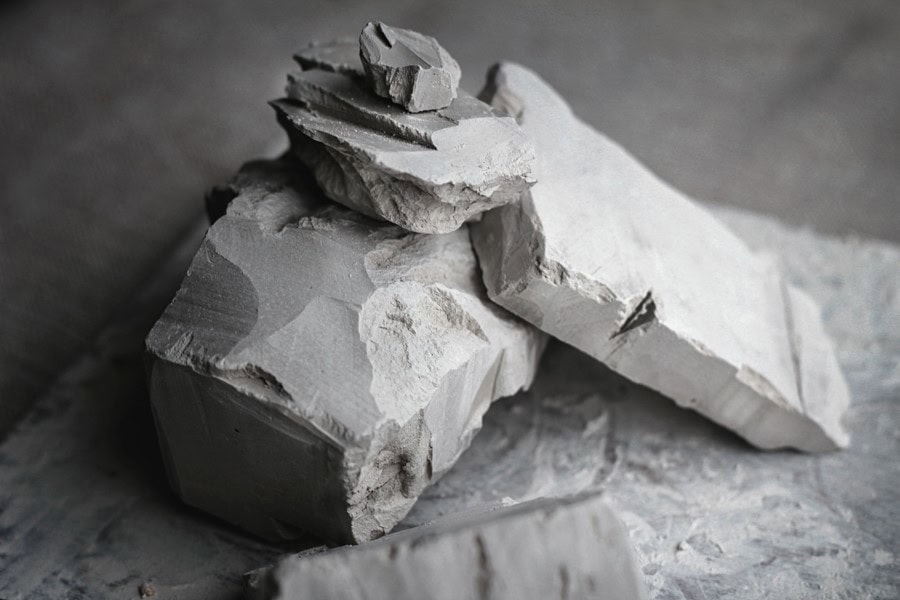
- Clay
As the main material for crafting teacups, figurines, gaiwans, chahais, chahes, and teapots, we use classical terracotta clay or a semi-porcelain blend (a mixture of different types of clay and minerals). Both options are entirely eco-friendly and suitable as a base for daily-use pottery. Our ware features thick walls – the optimal desition for the clay used, ensuring our teacups, teapots, and gaiwans retain heat well without reaching uncomfortable temperatures.
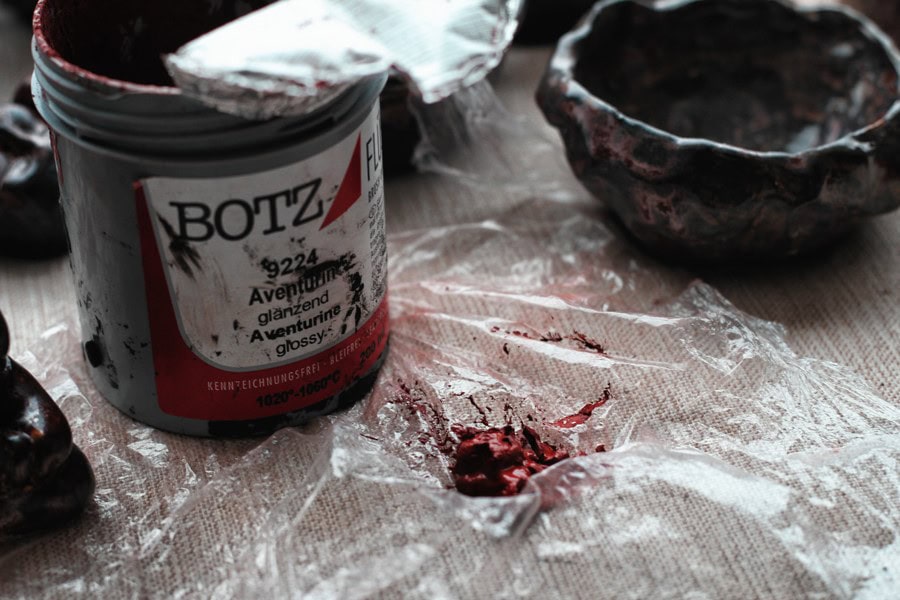
- Enamel
Enamel, or glaze, is the material used to cover clay, adding uniqueness to the appearance and making the utensils more comfortable and pleasant to the touch. The quality of the glaze determines how beautiful and durable the item will be. In our case, we use high-quality food-safe glazes from the German brand BoTZ. Thanks to their blends, we achieve an incomparable style and uniqueness for each piece.
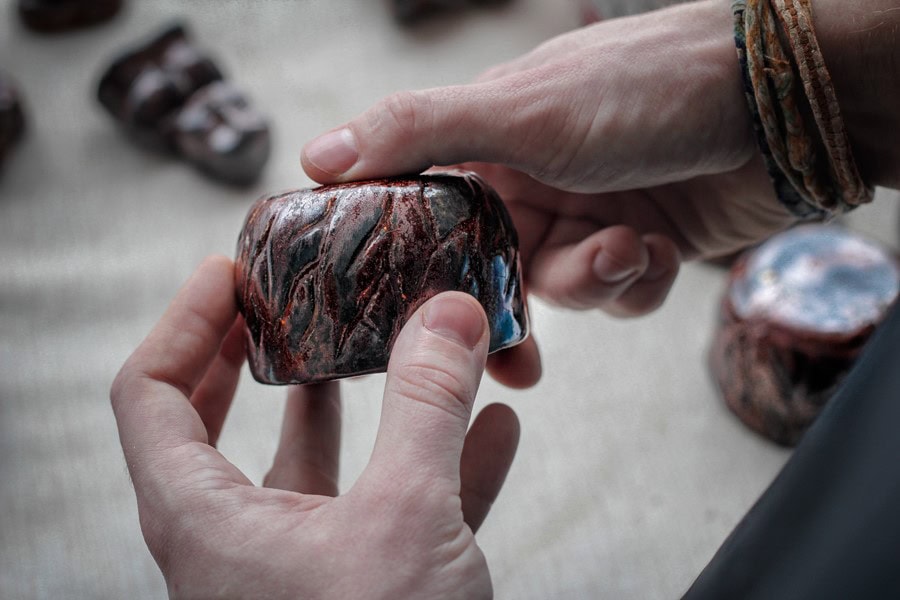
- Firing
Our pottery goes through two firings in the kiln. The first firing strengthens the clay structure and sets the molded form. Then, we coat the form made from the fired clay with enamel. Finally, it undergoes the second firing, which reinforces the enamel coating. The dual firing process in the kiln, at 900 and 1075 degrees, ensures that our pottery is exceptionally sturdy, reliable, and durable.
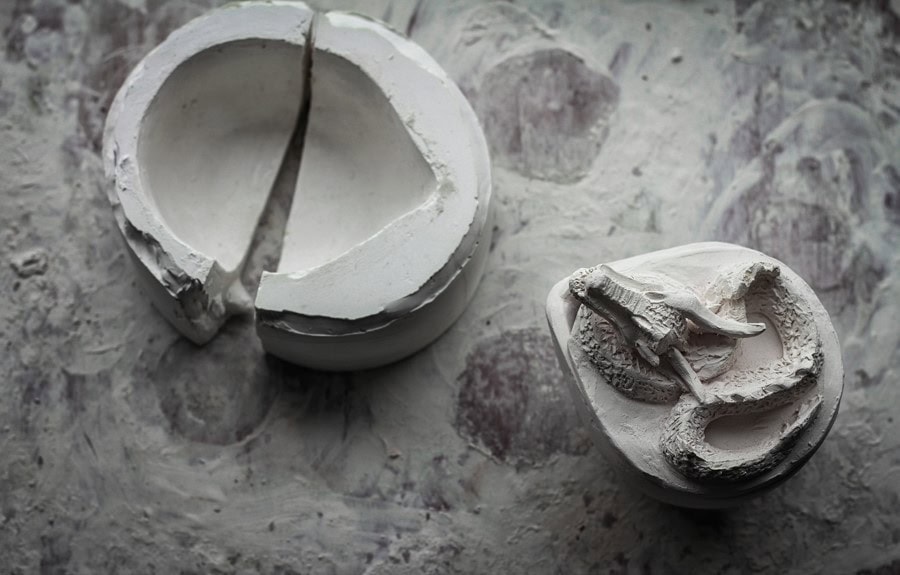
- Hands and molds
The entire process of sculpting each item, whether it’s a tea figurine or a complicated gaiwan, is done entirely by hand using polishing forms. We rarely use a potter’s wheel, so each piece remains unique, with its own distinctive shape and color scheme. Every piece we produce is imbued with time, creativity, and effort.
I would like to emphasize again that our ceramics have quite thick walls, which is a great advantage. The common problem with factory-made teaware is that the walls are often too thin, causing the items to heat up very quickly and possibly burn your fingers. This can disrupt the entire tea drinking process. For this reason, we produce ceramics that are designed with practicality in mind and ensure an enjoyable tea experience.
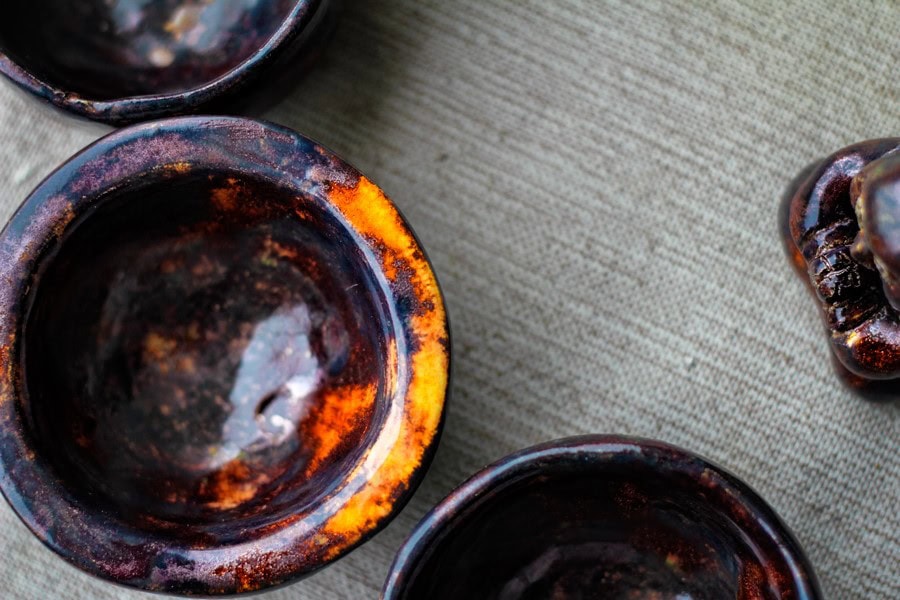
One of the most important aspects is that our ceramics are imbued with a unique energy that can be felt simply by holding the item. Our ceramics belong to the category of objects that are more than just objects. Handmade teacups don’t need a certain atmosphere, they create it. To truly understand this, one must experience it firsthand.
All the work is done with humility and serenity. It often happens that the blanks fail quality control and end up as defects. Frankly, this only deepens our love and respect for our craft. We are proud to be able to offer you high quality, handmade teaware from local artisans at a fair price.
0 Comments